While They Climb, You Squat: Strength Work That Fits the School Run
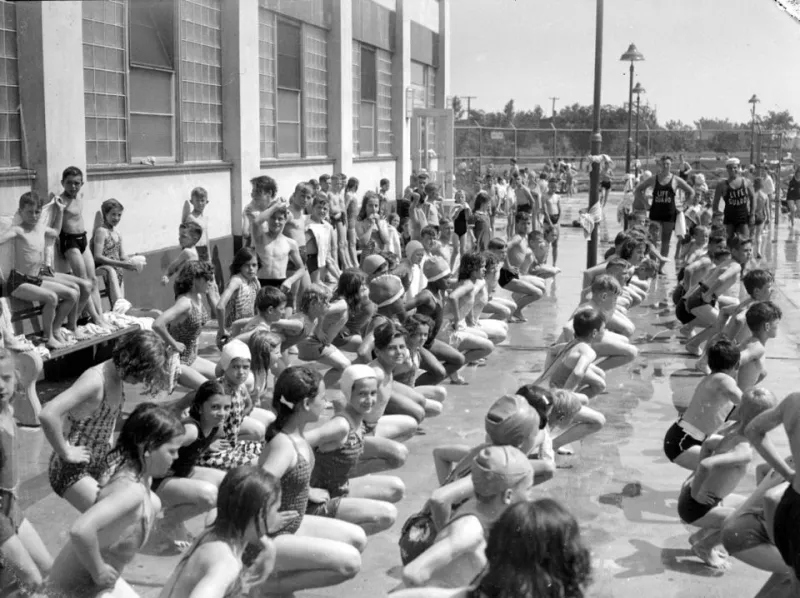
Photo: Conrad Poirier, Public domain, via Wikimedia Commons
There's a particular sort of Tuesday afternoon where the gym is a fantasy. You've got a child on the climbing frame, a bag with the snacks in it, and about forty minutes before tea needs to happen. Squeezing in a workout feels like one more thing on a list that's already too long.
But here's the thing I've come round to after years of training busy parents: the park is already a gym. You've just been standing in it, holding a coat, looking at your phone. Benches are boxes to step on. Low walls are press-up stations. The swing frame is a post to lean against. Nobody needs to know you're mid-circuit, and nobody's going to charge you a membership for it.
This isn't about smashing a personal best while your six-year-old shouts from the top of the slide. It's about ten to twenty minutes of honest, unglamorous strength work that fits into the life you actually have.
The park is already set up, you just have to notice it
Most UK parks have the same handful of useful objects: a wooden or metal bench, a low wall around a flowerbed, a set of steps up to a bandstand or a play area, and something to hold onto. That's genuinely enough for a beginner. You're not trying to replicate a full gym session — you're trying to remind your muscles, joints and balance that they exist.
A quick word on safety before anyone gets carried away. Check that whatever you're leaning on is fixed and solid. Don't balance on anything rickety, don't hang from anything that wobbles, and don't do this in a crowded playground where a small child might run into your knees. Supervise first, train second. If your child is young enough to need eyes on them constantly, do one exercise at a time between pushes on the swing.
The 20-minute circuit
Do this two or three times through, resting as long as you need between rounds. If you only get one round done before somebody needs the loo, one round counts.
Bench step-ups — 10 per leg. Find a bench that's roughly knee height or a bit lower. Put one whole foot on it, push through that foot to stand tall, then lower slowly. No bouncing off the back foot. This is quietly one of the best exercises for anyone who does the school run on foot.
Swing-frame squats — 12 reps. Stand facing the swing frame or a sturdy post, grip with both hands at chest height, feet hip-width apart. Sit your hips back as if there's a chair behind you, then drive up. Holding on helps you keep your balance and lets you sit a bit deeper than you might otherwise.
Low-wall press-ups — 8 to 12 reps. Hands on a wall at roughly chest height, feet stepped back, body in one long line. Bend the elbows and lower your chest towards the wall, then push away. Higher hands means easier; lower means harder.
Step or kerb calf raises — 15 reps. Stand on the edge of a step holding the rail, rise onto the balls of your feet, lower slowly. Underrated, especially if you're on your feet all day.
Bench plank or wall sit — 20 to 30 seconds. Either rest your forearms on a bench and hold a long line, or sit against a clean, flat wall with thighs parallel to the ground. Choose whichever feels kinder on your wrists and knees.
A lap of the park to finish. Walk it, don't race it. This is the cooldown and the bit where you check where your child has got to.
Making it easier, or a bit harder
If you're brand new to this, halve the reps and do one round. Do the press-ups against a taller wall, and skip the plank entirely for the first few weeks. There's no prize for wrecking yourself on a Wednesday.
If you're finding it comfortable, slow everything down. A three-second lower on the step-ups will do more for you than adding five extra reps. You can also add a second round, or hold the bottom of the squat for a beat before standing. If you've got a resistance band in the changing bag, loop it round a post for some gentle rows.
Timing, layers and the unwritten park code
Go early or go late. The playground crush tends to hit straight after school pick-up and again on weekend mornings. If you can get there at 9am on a Saturday or just after the school run has cleared, you'll have the benches to yourself and far less chance of apologising to a stranger every thirty seconds.
Dress in layers you can peel off. You'll be cold standing still and warm two minutes into the circuit, which is the classic British park problem. A thin fleece over a base layer and a pair of gloves in your pocket will cover most of October to March. Shoes with a bit of grip matter more than anything fancy — wet bark chippings are slippery.
And be a good citizen of the park. Don't monopolise the swings if there's a queue, don't prop your foot on a bench someone's about to sit on, and don't do press-ups across a path where a bike might come through. A cheery 'just using the bench for a minute' goes a long way.
When the weather says no
If it's horizontal rain and the sky is the colour of a wet slate, don't force it. Do the step-ups on your stairs at home, the press-ups against the kitchen worktop, and the wall sit against the hallway wall. Same circuit, different scenery. The point was never the park — it was the twenty minutes.
And if you get one round in, then spend the rest of the visit pushing a swing and talking about dinosaurs, that's not a failed session. That's a session plus a nice afternoon. Both count.